hornoměcholupská
A Residential development at the interface of urban structures
Project 2026
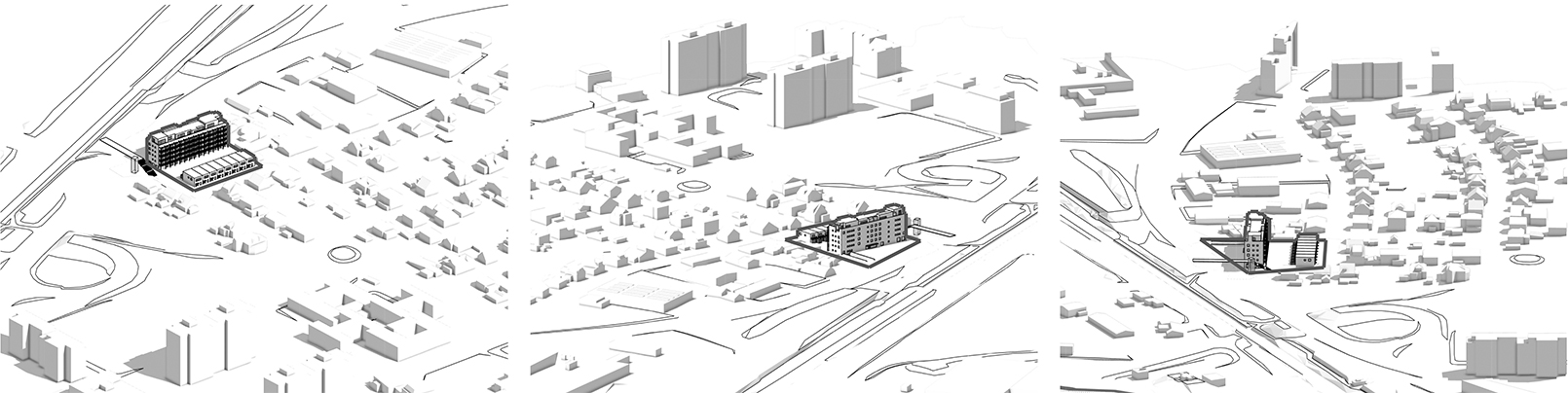
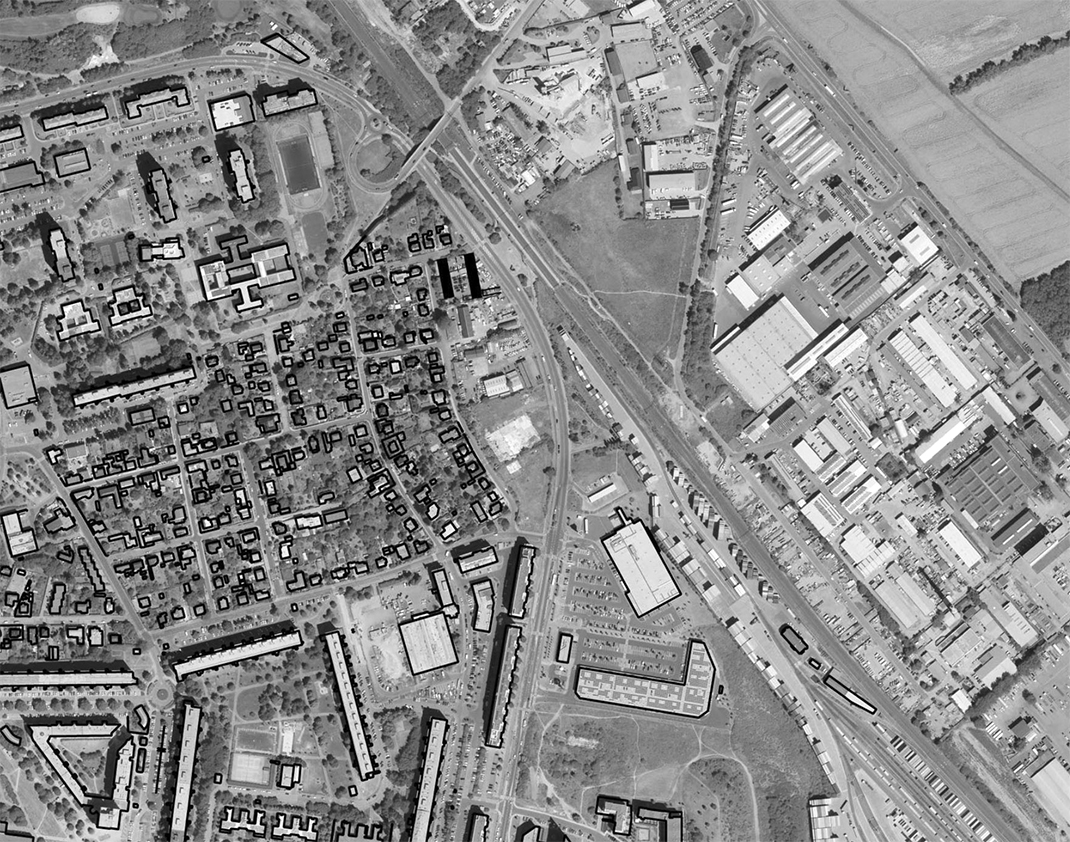
The agricultural character of Horní Měcholupy began to transform with the development of the railway, industry, and the urban expansion of Prague during the 20th century. The most significant change occurred in its second half, when the original village core was demolished and replaced by an extensive housing estate composed of slab apartment buildings and related transport infrastructure. In recent decades, the area has continued to evolve through the addition of new residential buildings, civic amenities, and the revitalization of public spaces.
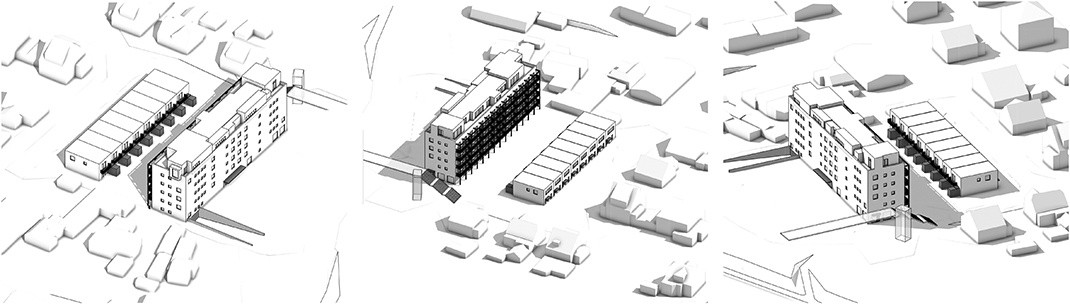
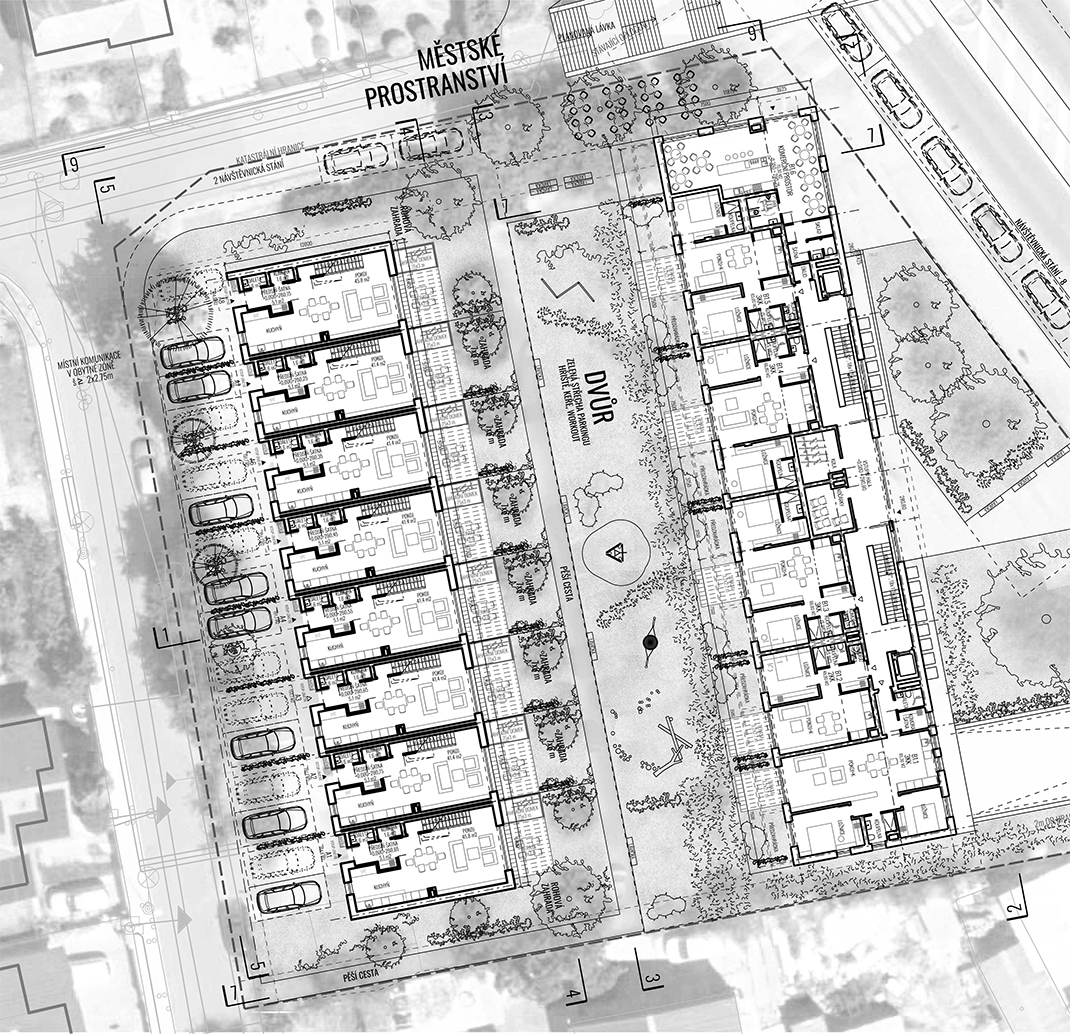
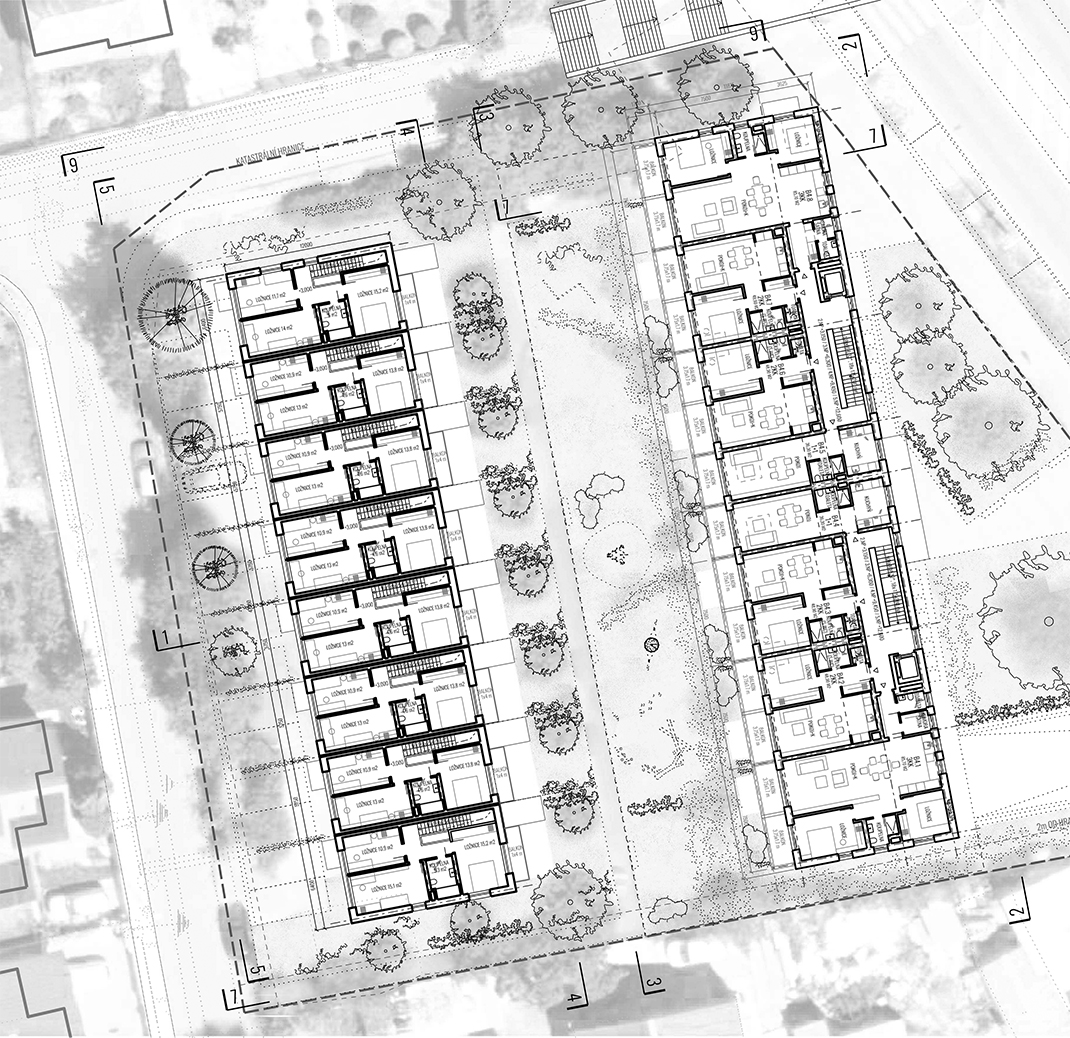
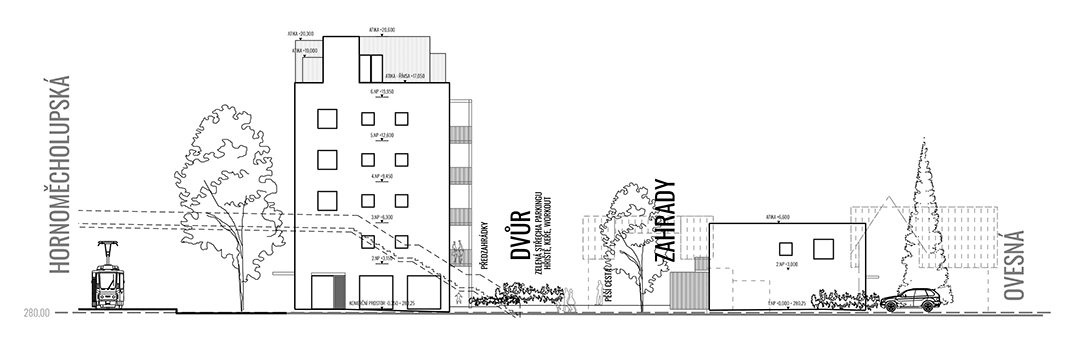
Neither the historical context nor the surrounding urban fabric predetermines a single building typology. The area is the result of multiple layers of development and therefore possesses an inherently heterogeneous character. The new residential development in Prague’s Horní Měcholupy embraces the principle of a heterogeneous urban structure as a response to its unique location between a traditional family-house neighborhood and the modernist structure of the housing estate. The composition combines two complementary forms of housing: a six-storey apartment building facing Hornoměcholupská Street and a row of eight terraced houses along the quieter Ovesná Street. The two building types are connected by a shared green courtyard that forms a natural transition between public space and private gardens.
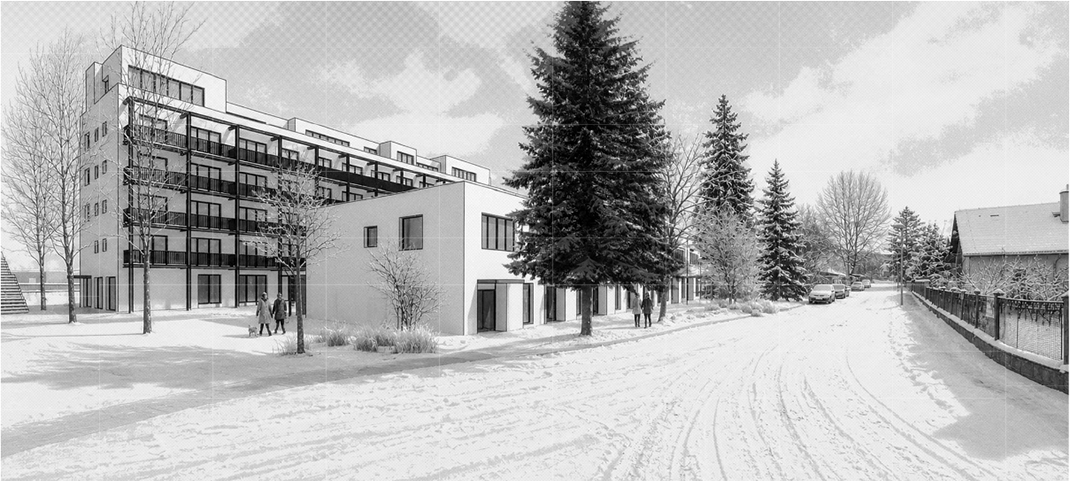
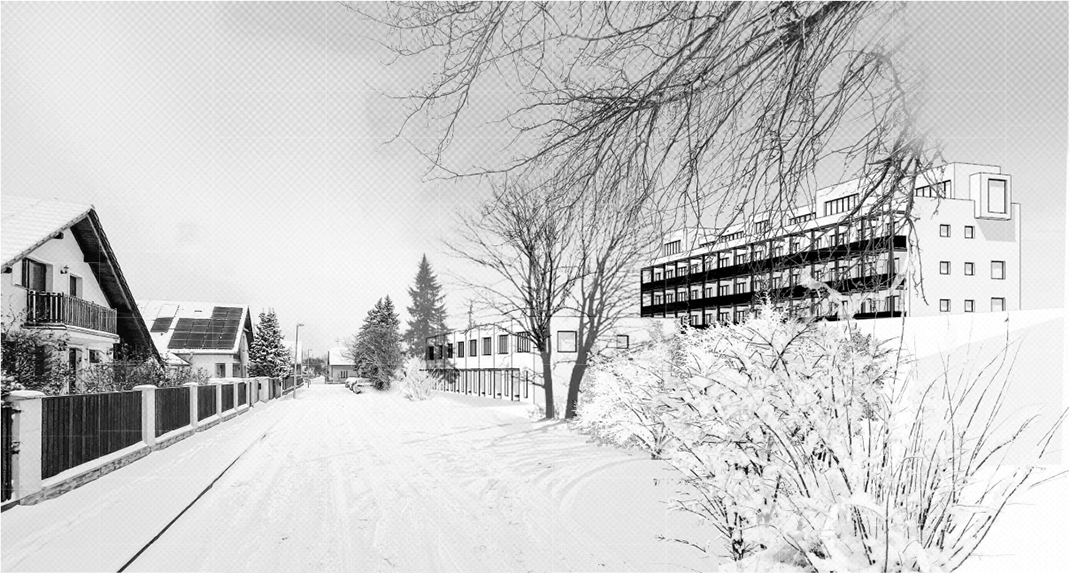
The concept aims to establish a dignified edge to the neighboring family-house district while respecting the rational, orthogonal planning principles of the adjacent housing estate. It responds to the transitional character of the site through two buildings of similar footprint yet different height, forming a complementary architectural pair. Along Hornoměcholupská Street, the apartment building acts as an urban barrier, protecting the quieter inner courtyard from railway and traffic noise. Alongside the neighboring villas, a row of eight terraced houses is designed to match the scale and character of the surrounding residential development.
An analysis of the local housing market revealed a strong demand for smaller and medium-sized apartments, corresponding to one-, two-, and three-room layouts accessible to a broad range of residents. The proposed mix of 39 apartments prioritizes diversity, affordability, and quality of living. Every dwelling is provided with either a balcony, a private front garden, or a terrace.
The architecture employs a restrained and timeless expression, aiming to create a coherent ensemble with a clear identity and lasting aesthetic value. Both the apartment building and the terraced houses share a unified material language, combining white rendered façades with terracotta-coloured metal accents.