kolbenova lofts
Interiors of the Kandinsky, Kupka, Le Corbusier, Mucha, Miró, and Warhol Lofts
Completed in 2026
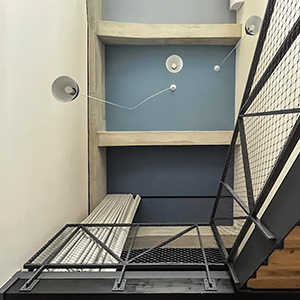
Building No. 340 of the former Kolben & Co. industrial complex in Prague–Vysočany was originally constructed for the production of small electric motors and instruments. The basement housed storage facilities, the upper floors were dedicated to manufacturing, and the top floor was later converted into offices and design studios. During the 1990s, the factory fell into decline, and what had once been a symbol of technological confidence became a brownfield site—a silent relic of the industrial era.
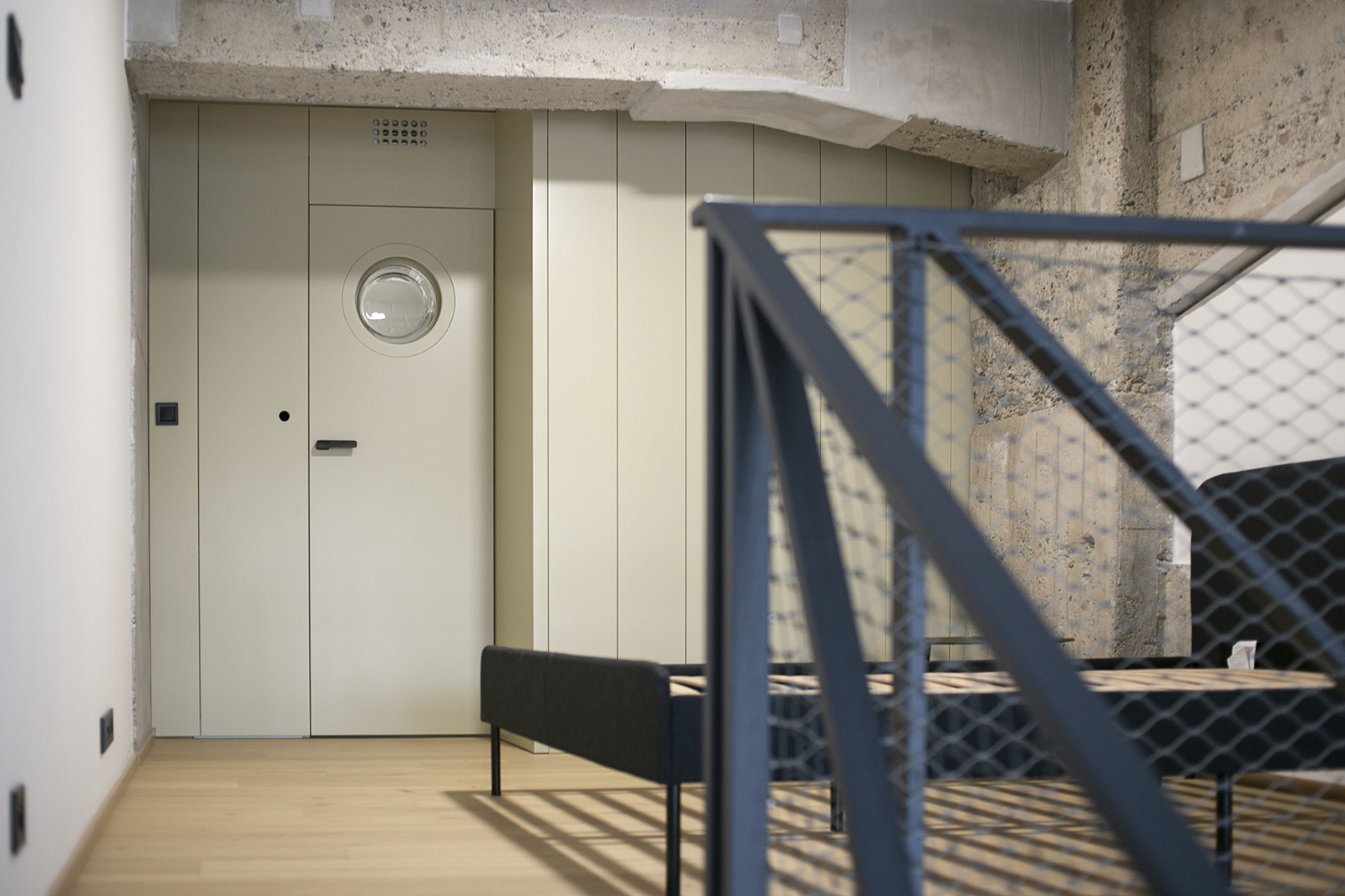
Today, the area is being transformed into a new residential district with the ambition of becoming a vibrant and attractive urban destination. The Metropolitan Plan envisions the creation of a fully developed city quarter with thousands of apartments and comprehensive public amenities. Building No. 340 was converted by the architectural studio Masák & Partner into a residential building comprising 215 loft apartments, while preserving its authentic structural framework and selected industrial features.
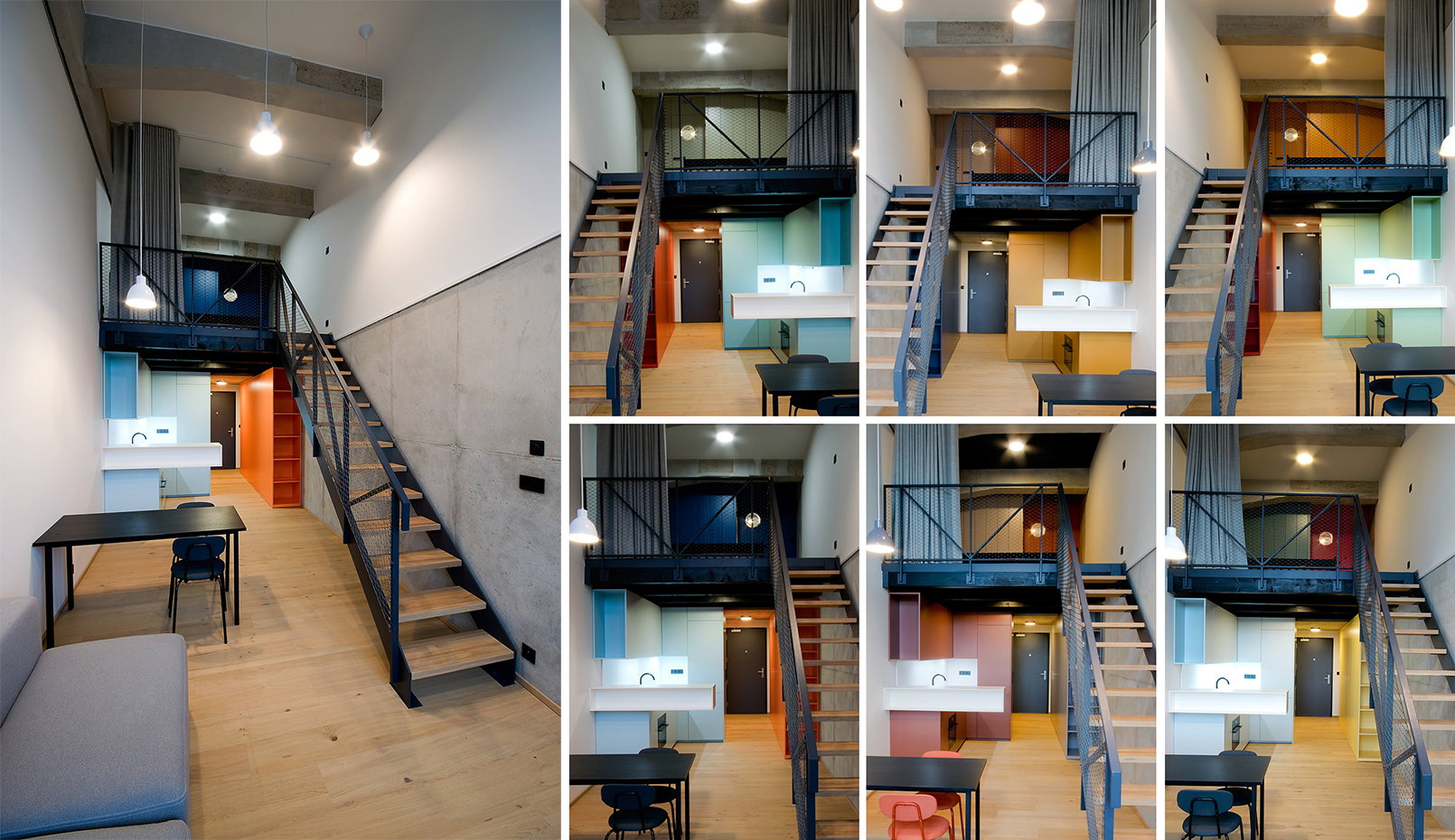
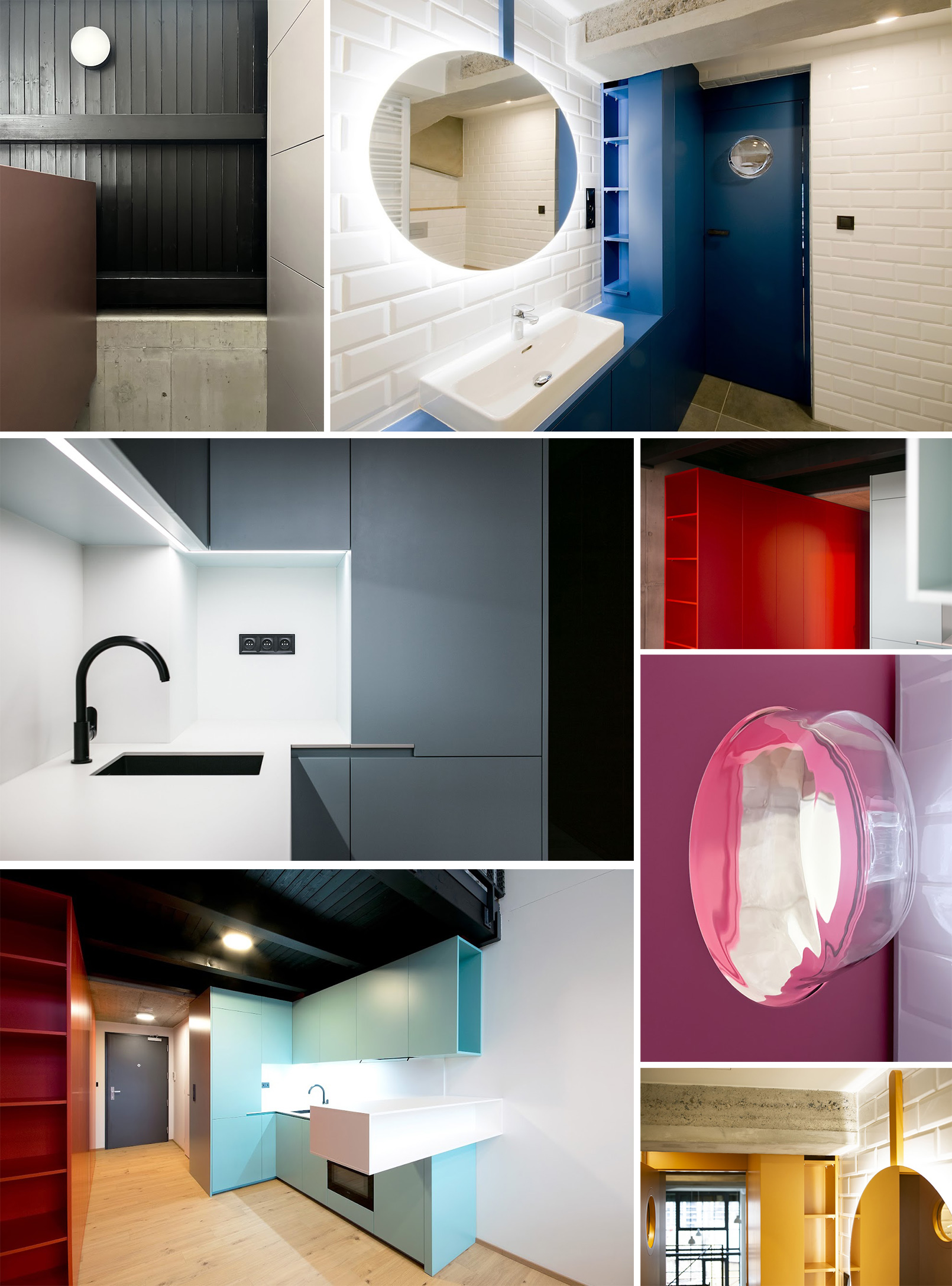
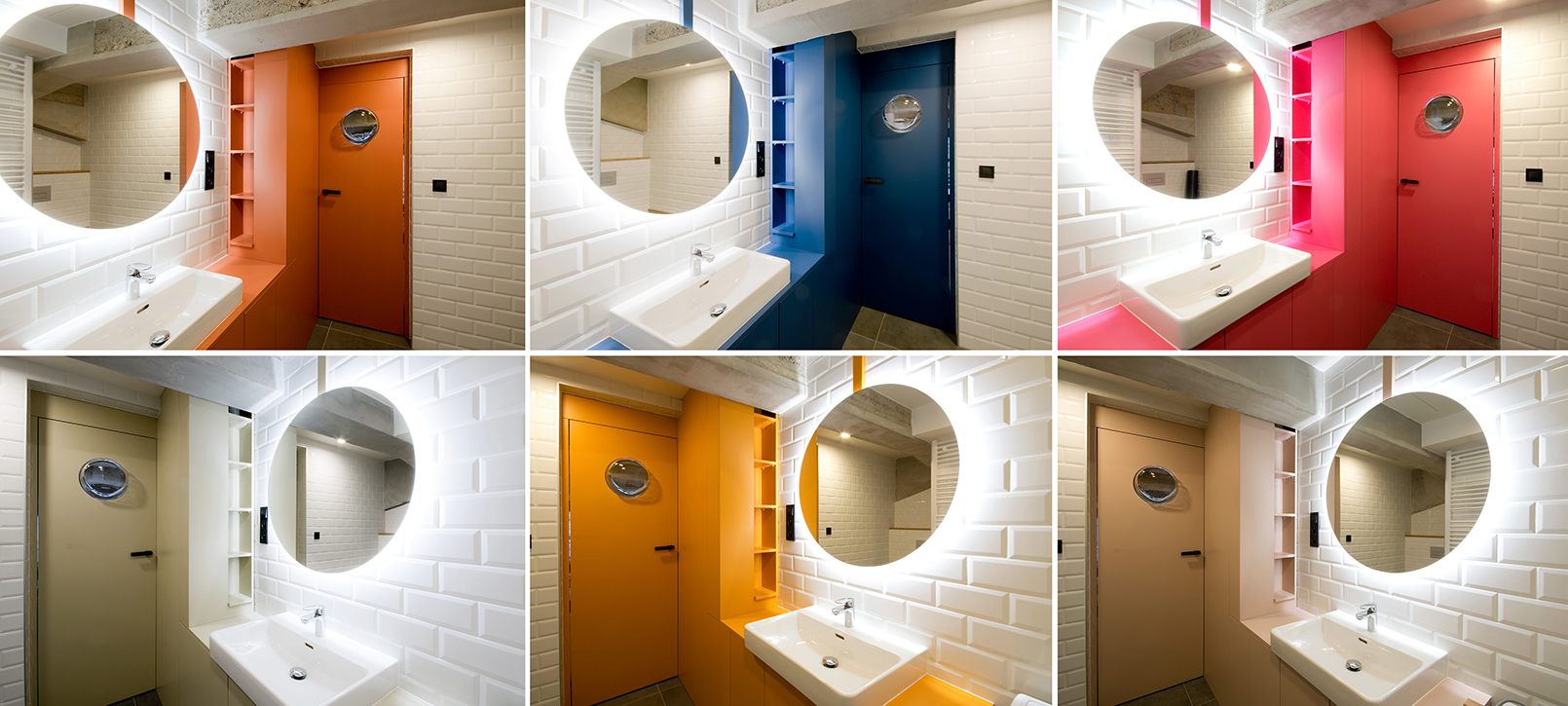
Our interior design proposal focused on six investment lofts intended for rental, offering an elevated standard of living combined with a distinctive artistic identity. Each loft is vertically organized into a lower living area and an upper gallery level containing the bedroom and bathroom. Three layouts are identical, while the remaining three are their mirrored counterparts.
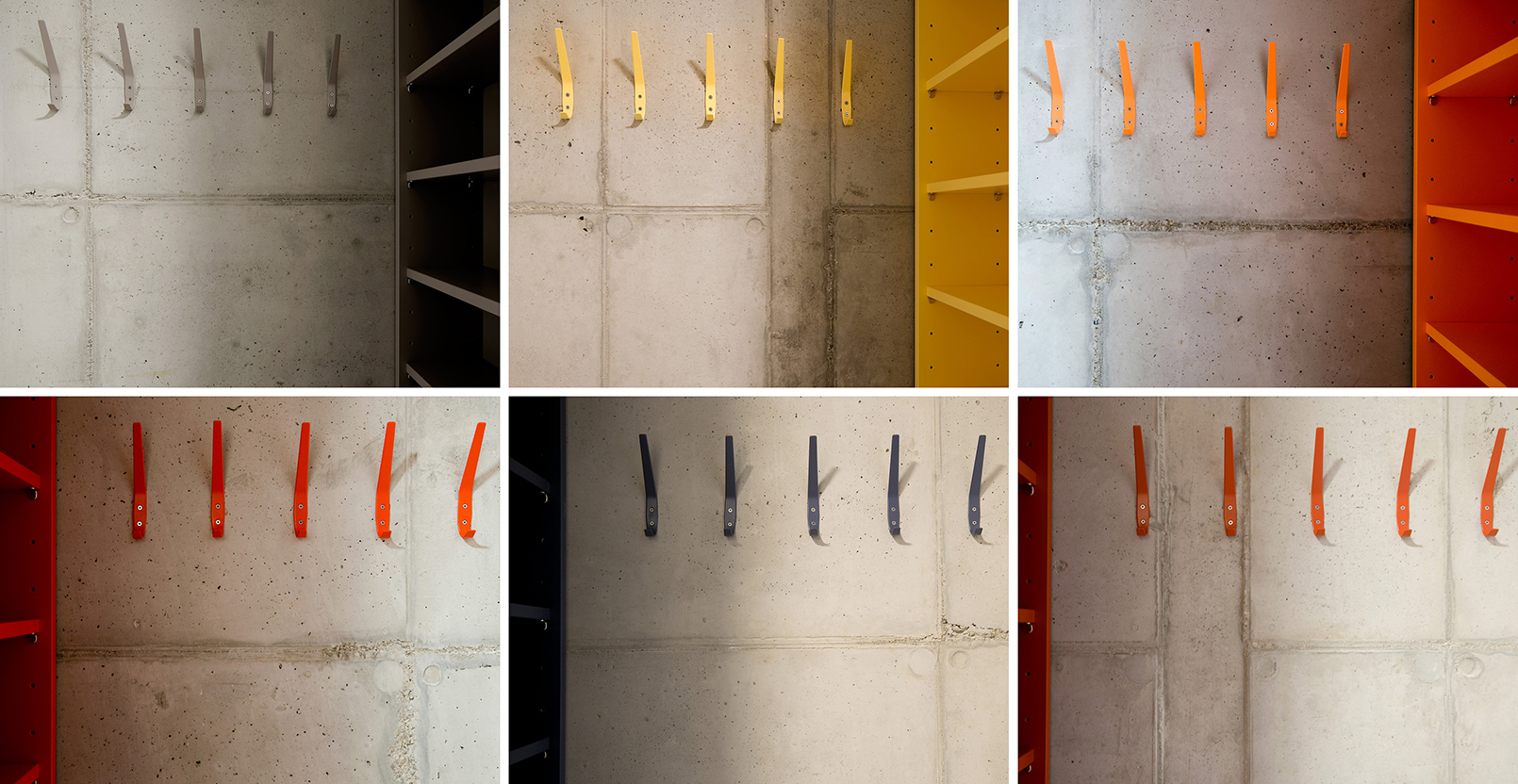
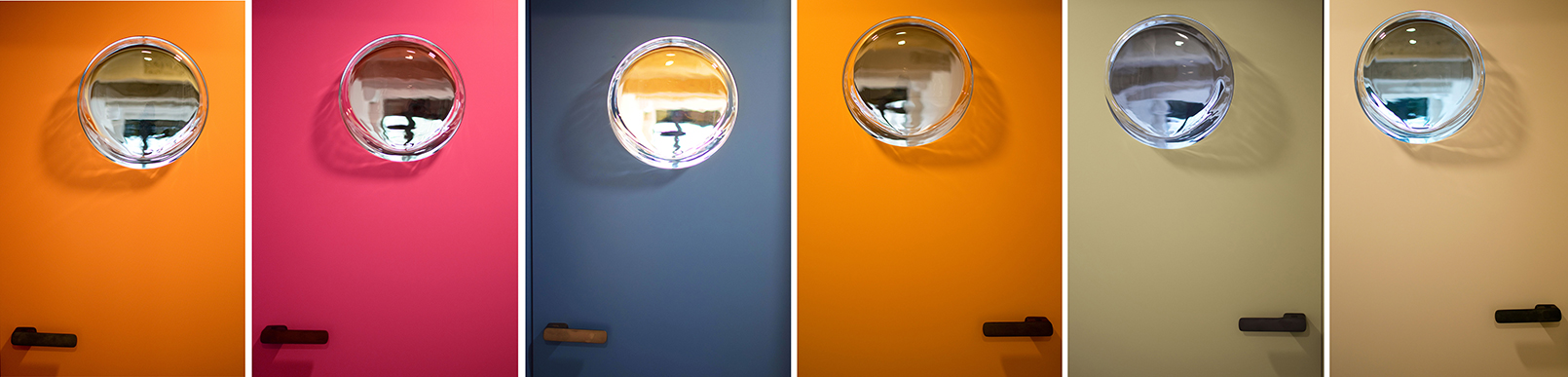
The character of the interiors emerges from a dialogue between the preserved industrial framework—columns and exposed ceiling beams—and newly inserted built-in elements that are formally restrained yet boldly coloured. Each loft is conceived as a unique artistic concept inspired by the work of a different artist: Vassily Kandinsky, František Kupka, Le Corbusier, Alfons Mucha, Joan Miró, and Andy Warhol. Their works, ranging from expressive compositions to carefully developed colour systems, demonstrate that intensity and contrast are not exclusive to artists’ studios but can naturally inhabit even the most industrial of settings.
It is precisely within this tension between austere construction and painterly imagination that a new spatial identity emerges.